
-
Content
Last Updated on September 17, 2024 by Robert Luong
Interchange fees are often one of the least understood aspects of credit card processing, and for good reason—they’re complicated!
When your business processes a credit card or debit card transaction, you expect to be charged a processing fee. But what you might not know is how that fee is determined. Interchange fees are one of the key components that make up the total processing cost for every transaction.
In this guide, we’ll break down everything you need to know about interchange fees, from A to Z, so you can fully understand what you’re paying for—and, more importantly, how to save money.
The ultimate guide to accepting credit cards.
Discover essential knowledge and industry insights to increase your bottom line.
What are Interchange Fees?
Interchange fees are set by the card networks and collected by customer’s banks when you accept a credit card.
These fees exist to cover the transaction processing costs, extending credit to the customer, and managing fraud risks. They also compensate the bank for authorizing transactions, maintaining the cardholder’s account, and handling chargebacks or disputes.
The interchange fee isn't just one, flat fee. It fluctuates every transaction based on several factors:
-
Card type: Basic cash-back cards generally have lower fees, while privilege or rewards cards come with higher fees.
-
Transaction method: In-person (card-present) transactions, such as tapping, have lower fees compared to card-not-present transactions, like manually entering card details online.
-
Merchant industry: The industry you operate in also affects the rate. For example, high-risk industries like pharmaceuticals have higher fees compared to lower-risk industries like restaurants.
How do interchange fees affect your processing fees?
Interchange fees are just one of three components that make up your processing fee for each transaction. Your total processing fee consists of the payment processor's margin, the card brand fee, and the interchange fee.
- Interchange fees are paid to the customer’s banks.
- Card brand fees are charged by card networks like Visa, Mastercard, AMEX, and Discover. These fees cover the cost of using the card network to process transactions.
- The payment processor’s margin is the fee your processor charges for enabling you to accept payments and for taking on the risk of underwriting your merchant account.
For example, let’s say you run a bakery in New York, and a customer buys $100 worth of donuts using a Visa Credit CPS card. The transaction is in-person (card-present) so the breakdown of fees that you have to pay is:
- Interchange fee: 1.29% + 10¢
- Card brand fee: 0.24% + 2¢
- Helcim’s markup: 0.40% + 8¢
The total processing fee is the sum of these charges, which comes to 1.93% + 20¢. For this $100 transaction, you would pay $2.13 in credit card processing fees.
Are debit and credit card interchange fees the same?
While both debit and credit transactions have interchange fees, they are not the same. Debit networks, like Interac in Canada or PIN Debit in the U.S., have their own interchange fee structures.
In general, credit card tend to have higher interchange fees than debit card transactions because they involve less risk for the customer’s bank - the customer uses their own money instead of borrowing money using a credit card for purchases.
Check out the US PIN Debit Rates here if you're a US merchant, or the Interac Network Fees here if you're a Canadian merchant.
If interchange fees vary, why do I pay a flat transaction fee?
While interchange fees fluctuate, many payment processors offer flat-rate pricing for simplicity, such as 2.7% + $0.2. With flat-rate pricing, the processor averages out the different interchange fees and adds a fixed markup, allowing you to pay the same rate for every transaction.
However, because the flat rate is typically set high enough to cover even the most expensive transactions, you often overpay for most transactions.
If transparency and cost savings are your priority, an interchange-plus pricing model offered by Helcim is a better fit. Interchange-plus pricing model passes the actual cost of each transaction directly to you.
Below are the average savings each industry has with Helcim’s interchange plus compared to flat rate credit card processors in 2025.
| Industry Market | Total Savings (%) |
|---|---|
| Automotive | 28.31% |
| Cab & Delivery | 27.14% |
| Charity & Non-Profit | 31.04% |
| Contractors & Home Services | 26.37% |
| Education | 33.09% |
| Enterprise & Utilities | 48.45% |
| Financial Institution | 24.40% |
| Gas Stations | 40.54% |
| Government | 41.54% |
| Health, Beauty & Wellness | 31.62% |
| Healthcare | 25.09% |
| Hotels & Lodging | 23.36% |
| Online Sales | 20.66% |
| Organizations & Associations | 27.06% |
| Platforms, Apps & SaaS | 20.20% |
| Professional Services | 27.68% |
| Recreation | 27.01% |
| Restaurant | 31.49% |
| Retail Goods | 25.00% |
| Transportation | 20.36% |
| Wholesale | 23.23% |
If you’re curious about how much you could save with interchange plus pricing, submit your statement here, and our team will provide you with a personalized savings estimate.
How much are interchange fees in 2025?
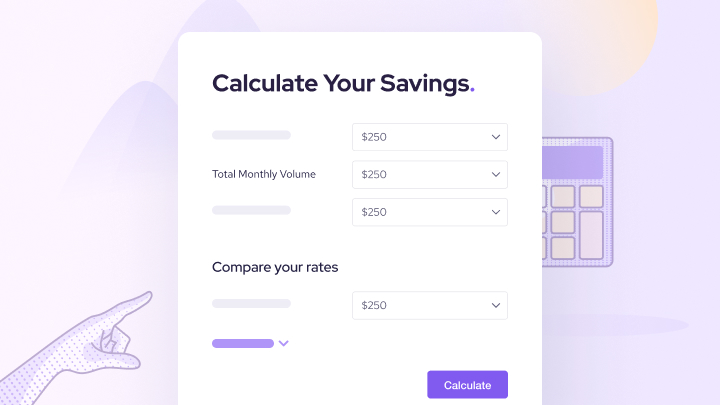
Visa, Mastercard, and most other credit card companies and brands are now required to make their interchange rates public. You can use Helcim pricing calculator to compare the interchange fees of different card brands.
You can find the most up-to-date interchange rates in 2025 below:
Canada 2025 interchange rates:
- Canada Visa interchange rates 2025
- Canada Mastercard interchange rates 2025
- Canada American Express interchange rates 2025
- Canada Discover interchange rates 2025
- Canada Interac Debit interchange rates 2025
The United States 2025 interchange rates:
- US Visa interchange rates 2025
- US Mastercard interchange rates 2025
- US American Express interchange rates 2025
- US Discover interchange rates 2025
- US Pin Debit interchange rates 2025
How to reduce interchange fees?
While interchange fees can’t be negotiated, there are several ways you can minimize them.
1. Encourage debit card payments
Debit card transactions typically have lower interchange fees than credit card transactions because they have less risk to the card issuing bank (customer’s bank).
With debit cards, funds are directly withdrawn from the customer’s bank account when the customer checks out. Since the bank doesn't have to extend credit or manage the risk of default, they charge lower fees for processing debit card payments.
Encouraging customers to use debit cards can help you significantly reduce your overall processing costs.
2. Process in-Person transactions
In-person (card-present) transactions typically have lower interchange fees because they are considered less risky than online (card-not-present) transactions.
When a customer physically presents their card and pays, it’s easier for the bank to verify that the cardholder is not a fraud. Encouraging customers to pay in person can help you keep processing costs down.
3. Encourage low-cost card brands
Different card networks, such as Visa, Mastercard, and American Express, charge varying interchange and card brand fees. Premium and rewards cards, especially, tend to come with higher fees. Encouraging customers to use lower-cost options, like standard Visa or Mastercard cards, can help reduce your processing expenses.
You can visit the Helcim pricing calculator to compare the interchange fees between different card brands.
What are the cheapest interchange fees?
The cost of an interchange fee largely depends on where the transaction takes place and the type of card used.
- In-person transactions, where the card is physically present, come with lower fees compared to online or card-not-present transactions.
- Card brands such as Visa, Mastercard, and American Express have different fees, with premium and rewards cards typically incurring higher costs than standard cards.
1. Cheapest interchange fees for online credit card transactions
In the United States, Visa currently offers the lowest interchange and card brand rates for online credit card transactions. For more details and comparisons, please visit the Helcim pricing calculator.
| Card type | Interchange Rate | Card brand fee |
|---|---|---|
| Credit Core | 1.89% + 0.1¢ | 0.13% + 2¢ |
| Credit Rewards | 2.00% + 0.1¢ | 0.13% + 2¢ |
| Credit Premium | 2.00% + 0.1¢ | 0.13% + 2¢ |
| Credit Premium Plus | 2.40% + 0.1¢ | 0.13% + 2¢ |
| Credit Corporate Level 2 | 2.30% + 0.1¢ | 0.13% + 2¢ |
In Canada, Visa currently offers the lowest interchange and card brand rates for online credit card transactions. For more details and comparisons, please visit the Helcim pricing calculator.
| Card type | Interchange Rate | Card brand fee |
|---|---|---|
| Consumer | 1.40% | 0.10% |
| Infinite | 1.65% | 0.10% |
| Privilege | 2.40% | 0.10% |
| Corporate | 2.00% | 0.10% |
2. Cheapest interchange fees for in-person credit card transactions
In the United States, Visa currently offers the lowest interchange and card brand rates for in-person credit card transactions. For more details and comparisons, please visit the Helcim pricing calculator.
| Card type | Interchange rate | Card brand fee |
|---|---|---|
| Credit CPS | 1.29% + 10¢ | 0.24% + 2¢ |
| Credit Rewards Traditional | 1.43% + 10¢ | 0.24% + 2¢ |
| Credit Rewards Signature | 1.43% + 10¢ | 0.24% + 2¢ |
| Credit Rewards Signature Preferred / Infinite | 1.88% + 10¢ | 0.24% + 2¢ |
| Credit Corporate Level 2 | 2.10% + 10¢ | 0.24% + 2¢ |
In Canada, Mastercard currently offers the lowest interchange and card brand rates for in-person credit card transactions. For more details and comparisons, please visit the Helcim pricing calculator.
| Card type | Interchange Rate | Card brand fee |
|---|---|---|
| Consumer (Core) | 0.92% | 0.10% + 1¢ |
| Premium (World) | 1.22% | 0.10% + 1¢ |
| High-Spend (World Elite) | 1.56% | 0.10% + 1¢ |
| Super Premium (Muse) | 1.65% | 0.10% + 1¢ |
| Corporate | 2.00% | 0.10% + 1¢ |
3. Cheapest interchange fees for online debit card transactions
In the United States, Discover currently offers the lowest interchange and card brand rates for online debit card transactions. For more details and comparisons, please visit the Helcim pricing calculator.
| Card type | Interchange rate | Card brand fee |
|---|---|---|
| Debit | 0.00% | 0.13% + 2¢ |
| Debit Regulated | 0.05% + 0.22¢ | 0.13% + 2¢ |
In Canada, Mastercard and Visa currently offer the same interchange rates for online debit card transactions:
- Debit Keyed: 1.150%
- Debit Utilities: 0.000% + 10¢
4. Cheapest interchange fees for in-person debit card transactions
In the United States, Mastercard currently offers the lowest interchange and card brand rates for in-person debit card transactions. For more details and comparisons, please visit the Helcim pricing calculator.
| Card type | Interchange Rate | Card brand fee |
|---|---|---|
| Debit Regulated | 0.05% + 22¢ | 0.13% + 2¢ |
| Debit Business Regulated | 0.05% + 22¢ | 0.13% + 2¢ |
| Debit | 1.05% + 15¢ | 0.13% + 2¢ |
| Debit Business | 1.65% + 10¢ | 0.13% + 2¢ |
In Canada, Mastercard and Visa currently offer the same interchange rates for in-person debit card transactions:
- Debit Retail: 0.250% + 5¢
- Debit Grocery: 0.150% + 5¢
- Debit Gas Station: 0.150% + 5¢
Save 25% on fees with Helcim interchange plus
If your business wants to accept debit and credit cards with low costs, no monthly fees, contracts, or hidden charges, Helcim is the ideal solution.
Helcim offers 25% lower fees on average compared to flat-rate processors like Square, PayPal, or Stripe. You’ll get a free merchant account and tools for in-person and online payments, including online invoice system, virtual terminal, and POS software.
If you're ready to switch but are stuck with your current provider, Helcim’s Merchant Buyout Program offers up to $500 in credits to cover contract cancellation or equipment costs.
We’ll guide you through the process, from paperwork to migrating your data. Switch to Helcim for better service and lower fees today.

Break up with bad rates.
Feeling stuck with your provider? We'll waive $500 of your processing fees when you switch to Helcim.
FAQ
Why do online transactions have higher interchange fees than in-person transactions?
In in-person transactions, the customer is physically present, which lowers the risk of fraud. In contrast, with online purchases, it’s harder to verify that the person making the payment is the actual cardholder. To offset this risk, card networks and banks set higher interchange fees for online transactions to protect against potential losses.
How do credit card rewards programs affect the interchange fee?
Credit card rewards programs often cause higher credit card interchange fees because the card issuing bank (customer's bank) needs to cover the cost of offering those rewards, such as cashback or points.
Why do you have to pay the interchange fee?
Merchants must pay interchange fees to compensate the customer's bank for processing the transaction. These fees also cover the bank’s risk for extending credits, fraud protection, and maintaining the credit card payment networks.
Are all credit card interchange fees the same across networks?
No, credit card interchange fees vary across different credit card payment networks, like Visa, Mastercard, and American Express. Each network set has its own interchange and card brand fees, which can also vary depending on the card type.
How do credit card rewards impact processing fees?
Credit cards with generous credit card rewards, such as travel points or cashback, have higher credit card fees for merchants. This is because the cost of those rewards is partially funded by the interchange fees that businesses pay when accepting these cards.
Can I avoid paying higher interchange fees for rewards cards?
While you can’t avoid paying the interchange fee entirely, you can minimize them by encouraging customers to use debit cards or lower-tier credit cards that aren’t tied to credit card rewards programs. This can help reduce the overall cost of processing transactions.
What is the Credit Card Competition Act?
The Credit Card Competition Act is proposed U.S. legislation designed to increase competition among credit card payment networks. It requires banks to offer at least two network options for routing transactions, allowing merchants to choose lower-cost alternatives. The goal is to reduce credit card interchange fees and help businesses save on processing costs.
Related Articles
-
How to use the Helcim Rate Calculator
Ryleigh Stangness | May 19, 2023
-
Are Payment Processing Fees Tax Deductible?
Ryleigh Stangness | March 28, 2023
-

How to reduce your credit card processing fees
Ryleigh Stangness | November 1, 2022
-

Interchange Plus vs Flat Rate Pricing: Which one is more affordable?
Danny Randell | September 13, 2022
-
Credit Card Processing Fees Ultimate Guide
Ryleigh Stangness | July 1, 2022
-
Interchange plus ultimate guide from A-Z
Jeff Merkel | June 14, 2022
-

Understanding Different Payment Processing Pricing
Chris Reid | September 12, 2020